
In modern wood-based panel production lines, conveyor belts operate continuously under heavy loads, high tension, and demanding production conditions. While customers often focus on belt materials and surface patterns, the belt joint is one of the most critical factors affecting overall performance.
A poorly designed joint can lead to uneven running, tracking problems, premature wear, and unexpected downtime. By contrast, a precision-engineered Finger Splice provides the strength and flexibility required for long-term, stable operation.
A Finger Splice is a precision-machined interlocking joint in which both belt ends are cut into matching finger-shaped profiles and permanently joined using a hot vulcanization process or a suitable bonding method, depending on the belt construction.
Compared with traditional straight joints, a Finger Splice distributes tensile forces more evenly across the joint, resulting in higher strength and smoother belt operation.
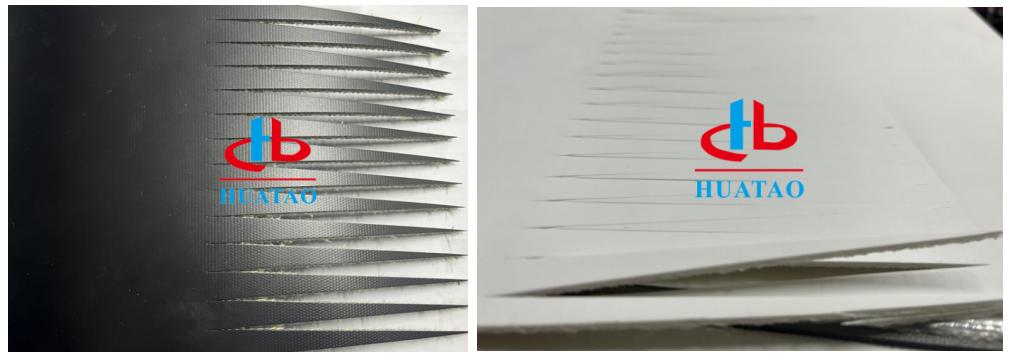
The interlocking finger structure distributes stress across multiple contact points, helping the joint withstand high tensile loads during continuous operation.
Because the joint thickness closely matches the belt body, the belt passes over rollers more smoothly, reducing vibration and impact.
A well-manufactured finger splice maintains belt alignment and minimizes the risk of edge wandering during long production runs.
Reduced stress concentration and improved flexibility contribute to extended belt life and lower replacement frequency.
Reliable joints reduce the likelihood of unexpected failures, minimizing production interruptions and maintenance expenses.
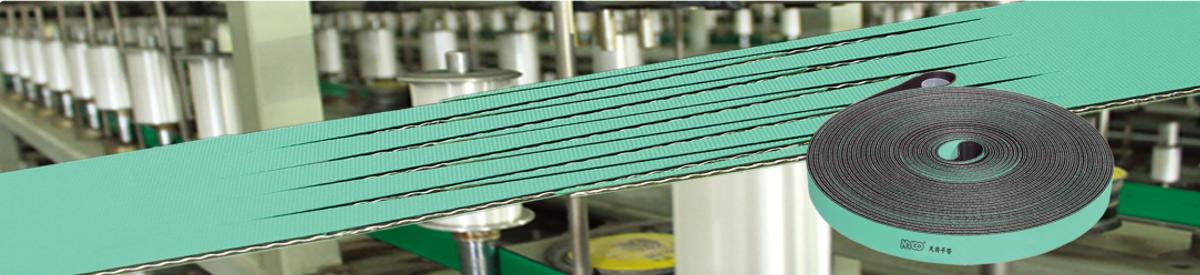
Finger splice technology is widely used for:
These belts are commonly applied in MDF, HDF, Particle Board, OSB, plywood, and biomass production lines.
The quality of a conveyor belt is determined not only by its material but also by the performance of its joint. A professionally manufactured finger splice enhances strength, stability, and durability, helping reduce downtime and improve production efficiency.
For wood-based panel manufacturers seeking reliable conveying solutions, choosing the right joint technology is just as important as selecting the right belt.
HUATAO Wood-Based Panel Machinery
Website: www.woodpanelmachinery.com
Email: bella@huataogroup.com
can not be empty
can not be empty

HUATAO WOOD PROCESSING BELT Co., Ltd
ADD : No.298 Zhonghua North Street, Shijiazhuang 050000 China.
TEL : +86 0311 80690567
EMAIL :bella@huataogroup.com
Web: www.huataobelt.com
 WhatsApp & WeChat : +86 17731169773