
In MDF, Particle Board, and OSB production lines, the forming process directly influences the final board quality.
Before pressing, the loose mat contains a large amount of trapped air. The Deaeration Belt plays an important role in removing this air and improving mat structure before entering the press system.
However, during long-term operation, some manufacturers experience Deaeration Belt blockage problems, which can reduce air removal efficiency and negatively affect production stability.
Understanding the causes and solutions of Deaeration Belt clogging helps manufacturers improve production efficiency and extend equipment service life.
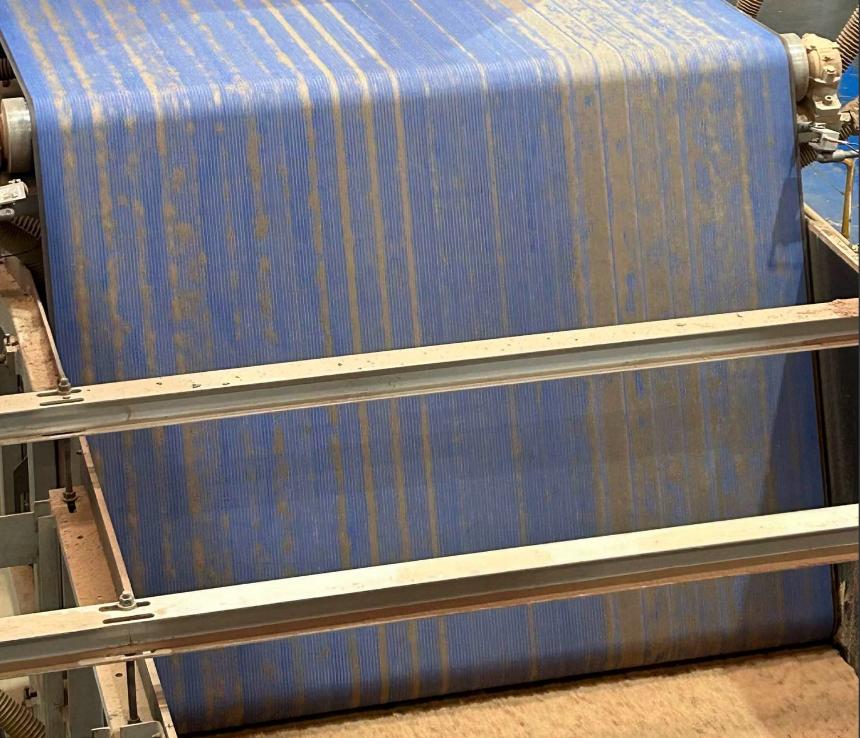
The Deaeration Belt is mainly installed in the forming and pre-pressing section.
Its main functions include:
A properly working Deaeration Belt helps produce panels with:
One of the most common causes of blockage is the accumulation of:
During continuous operation, these particles gradually fill the belt openings and reduce air permeability.
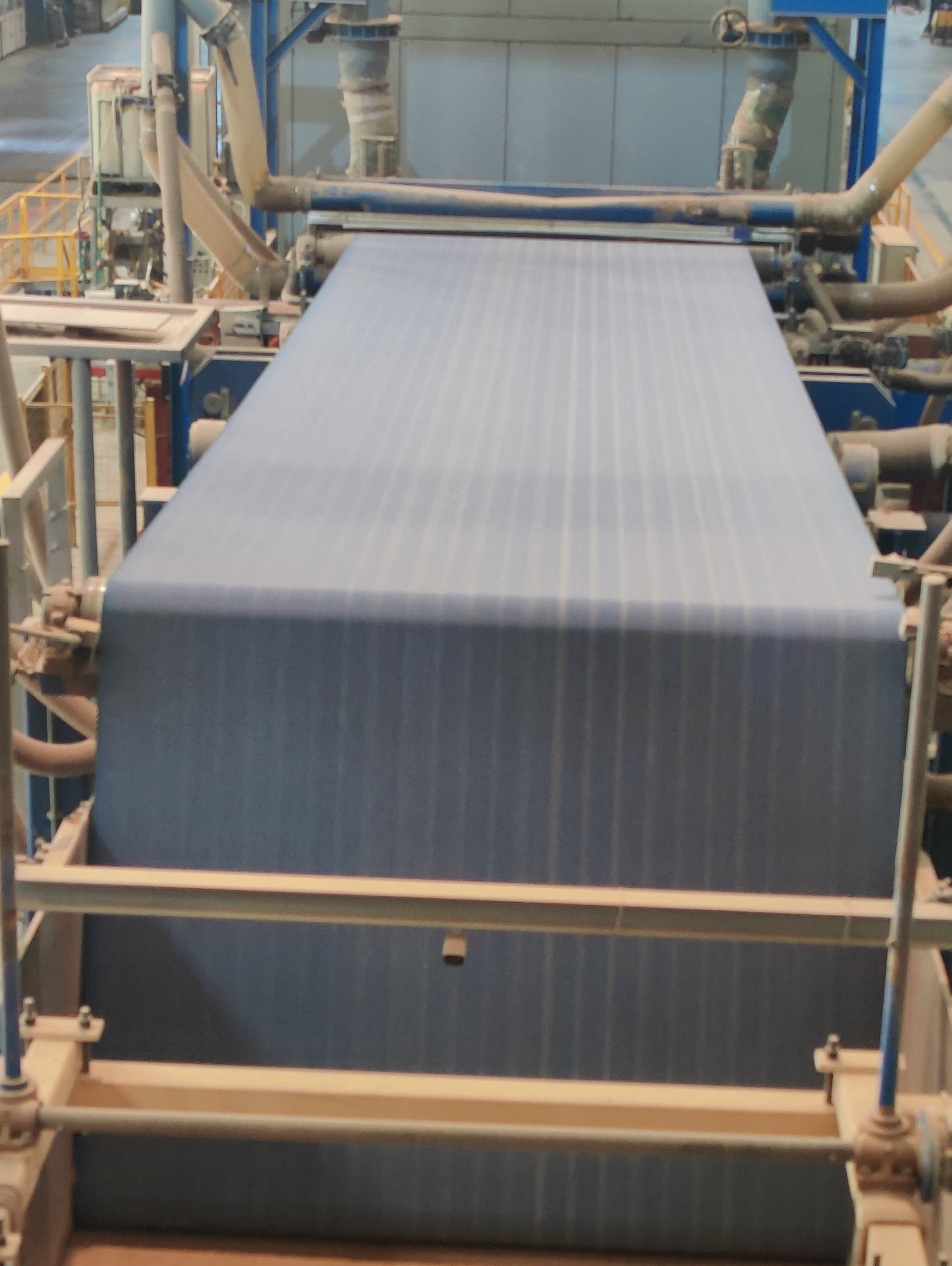
A Deaeration Belt requires an effective cleaning system.
If cleaning devices are not working properly:
Common issues include:
Different production lines require different Deaeration Belt designs.
Using an unsuitable belt may cause:
Important selection factors include:
Excess moisture can increase the adhesion of fibers and dust.
Wet materials are more likely to stick to the belt surface, causing:
Proper control of:
can help reduce clogging problems.
Incorrect belt tension may affect the self-cleaning ability of the system.
Problems include:
Regular inspection of:
is necessary for stable operation.
Establish preventive maintenance schedules:
Daily:
Weekly:
Monthly:
A high-performance Deaeration Belt should provide:
Reducing blockage requires cooperation between different processes:
A worn Deaeration Belt may have:
Timely replacement prevents larger production problems.
HUATAO supplies high-quality Deaeration Belts designed for MDF, HDF, Particle Board, and OSB production lines.
Our Deaeration Belts feature:
Applications include:
The Deaeration Belt is a small but critical component in wood-based panel production.
When blockage occurs, it can affect air removal efficiency, mat quality, and overall production stability.
Through correct belt selection, regular cleaning, proper maintenance, and timely replacement, manufacturers can significantly improve production reliability and reduce downtime.
A high-quality Deaeration Belt helps ensure smoother operation and better performance throughout the entire panel production process.
HUATAO Wood-Based Panel Machinery
Website: www.woodpanelmachinery.com
Email: bella@huataogroup.com
Whatsapp: +8617731169773
can not be empty
can not be empty

HUATAO WOOD PROCESSING BELT Co., Ltd
ADD : No.298 Zhonghua North Street, Shijiazhuang 050000 China.
TEL : +86 0311 80690567
EMAIL :bella@huataogroup.com
Web: www.huataobelt.com
 WhatsApp & WeChat : +86 17731169773