
In a particle board production line, the forming section is responsible for transforming loose wood particles into a continuous and properly distributed mat before pressing.
Much attention is usually given to the forming machine, dosing system, glue blending equipment and pressing section. However, some of the smaller mechanical components can also have a significant effect on long-term production stability.
The Diamond Roller is one of these often-overlooked components.
Installed in the particle board forming section, the roller works in direct contact with wood particles and the forming process. Because of this working environment, surface wear, dimensional changes and mechanical instability can gradually affect its performance.
A properly designed Diamond Roller is intended to provide a combination of high wear resistance, stable geometry, reliable operation and long service life, making it suitable for demanding continuous particle board production.
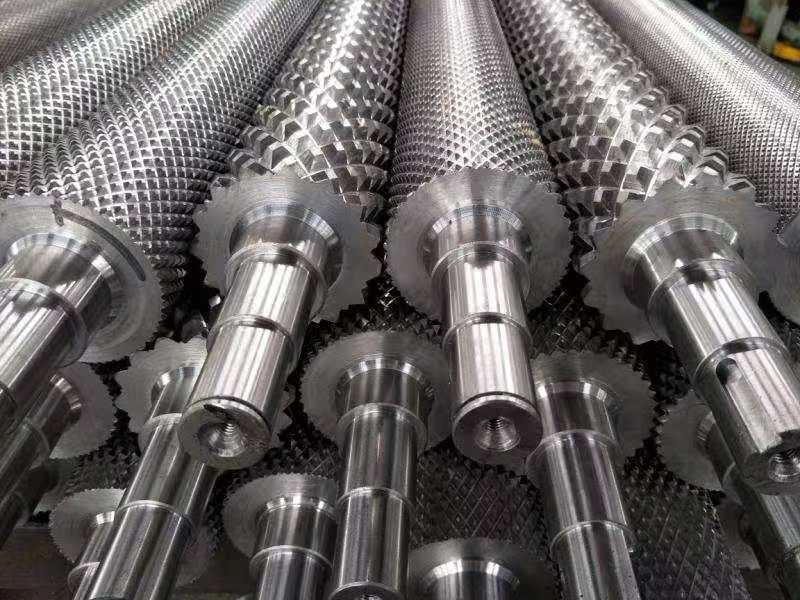
A Diamond Roller is a specialized forming-section roller designed for use in particle board manufacturing.
Its working surface incorporates a diamond-based or diamond-enhanced structure intended to provide strong resistance against abrasive wear.
Unlike a standard conveying roller whose primary function is simply to support or transport material, a forming roller interacts directly with the particle layer during the forming process.
Depending on the machine design, the Diamond Roller can contribute to:
The exact roller structure, dimensions and surface configuration depend on the forming machine and application requirements.
Particle board production is not only about pressing particles under high temperature and pressure.
Before the press, loose particles must be distributed into a mat with controlled characteristics.
The forming section determines how the material is laid down and conditioned before pre-pressing and hot pressing.
A well-controlled particle mat should have appropriate:
Poor material distribution can create variations that may continue into the pressing process.
This is why forming-section components deserve careful attention.
Wood particles are abrasive.
During continuous production, the roller can be exposed to a large amount of material for extended periods.
Several factors contribute to the demanding environment:
Over time, a conventional working surface may gradually wear.
As wear increases, the original roller geometry can change.
This is one reason wear resistance is particularly important when selecting a forming roller.
Roller wear may appear to be a simple mechanical issue, but its effects can extend into the forming process.
As the working surface changes, the relationship between the roller and the particle mat can also change.
Potential consequences may include:
Not every forming problem is caused by roller wear, but excessive wear should be considered whenever the condition of the forming section changes over time.
The most obvious advantage of a Diamond Roller is its resistance to abrasive wear.
The diamond-based working surface is designed for demanding environments where continuous contact with wood particles can gradually damage conventional surfaces.
High wear resistance can help the roller maintain its functional characteristics over a longer operating period.
This may result in:
Less surface deterioration → Longer service intervals → Fewer replacements → Reduced maintenance interruptions
For plants operating continuously, this can provide meaningful operational value.
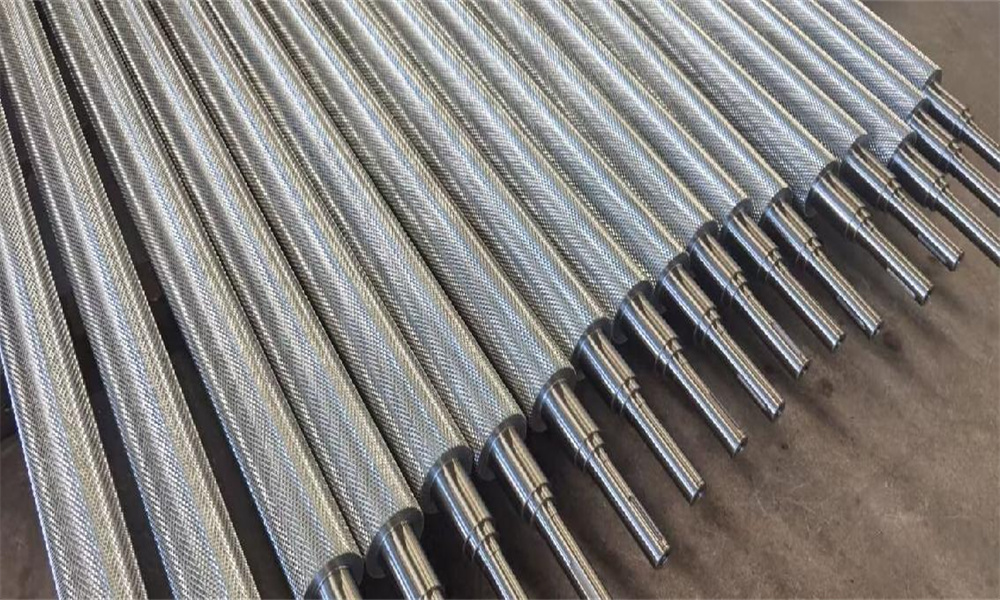
Wear resistance is important not simply because it extends service life.
It also helps preserve the roller's working geometry.
A forming roller is required to maintain its designed shape and dimensional characteristics during operation.
Excessive wear can gradually alter:
A more wear-resistant surface can help reduce these changes and support more stable operating conditions.
This is particularly valuable in continuous particle board production.
Diamond is widely recognized for its exceptional hardness.
When an appropriate diamond-based surface is applied to a roller designed for industrial use, it can provide strong resistance against abrasive wear.
This makes Diamond Rollers particularly attractive for applications involving:
However, hardness alone does not guarantee good performance.
The roller substrate, surface treatment, bonding quality, machining accuracy and overall design also need to be properly matched.
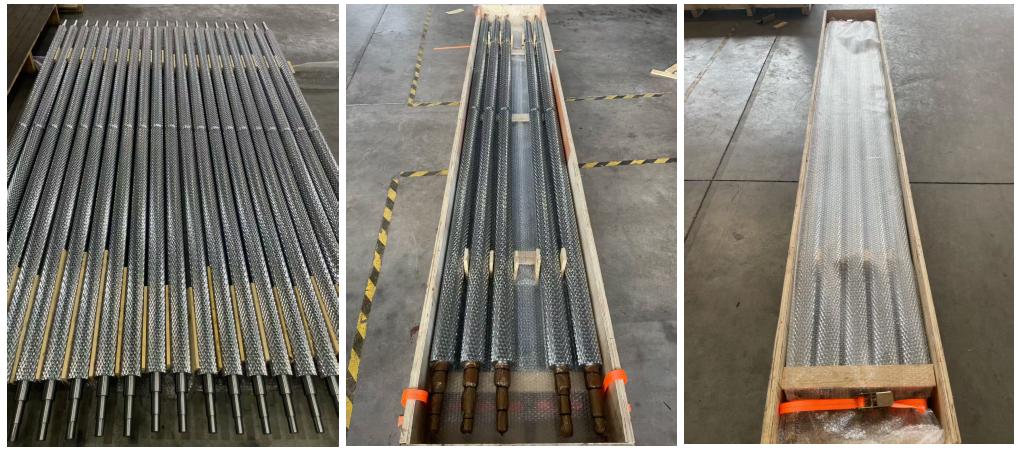
The Diamond Roller should be viewed as part of the complete forming process.
A simplified particle board production flow is:
Wood Preparation → Screening → Drying → Glue Blending → Metering → Forming → Mat Conditioning → Pre-Pressing → Hot Pressing
The forming stage transforms the prepared particles into a continuous mat.
The roller may interact with this material layer depending on the specific machine configuration.
The objective is to help maintain controlled and repeatable forming conditions.
Stable forming is important because irregularities introduced before pressing can become more difficult to correct later.
Different roller materials and surface treatments provide different levels of performance.
| Performance Factor | Conventional Forming Roller | Diamond Roller |
|---|---|---|
| Wear Resistance | Standard to Good | Excellent |
| Surface Hardness | Depends on material | Very High |
| Resistance to Abrasion | Good | Excellent |
| Long-Term Surface Stability | Application dependent | Improved |
| Resistance to Surface Wear | Moderate | High |
| Maintenance Interval | Application dependent | Potentially longer |
| Continuous Operation | Suitable | Well suited to demanding applications |
Actual performance depends on the complete roller construction, operating conditions and machine design.
It is easy to assume that a Diamond Roller is valuable simply because it lasts longer.
In reality, the benefits can extend beyond service life.
A properly engineered roller should combine:
Wear Resistance + Dimensional Accuracy + Mechanical Strength + Surface Stability + Dynamic Balance
If any one of these areas is poor, the overall performance may be compromised.
For example, excellent surface wear resistance cannot compensate for incorrect shaft dimensions or poor dynamic balance.
This is why roller manufacturing quality is critical.
Particle board forming systems are precision mechanical assemblies.
The roller needs to maintain the required:
Small dimensional errors can influence the relationship between the roller and surrounding components.
This becomes more important at higher operating speeds and tighter process tolerances.
Therefore, machining accuracy should be evaluated together with material and surface treatment.
A forming roller may rotate continuously for many hours.
If the roller is not properly balanced, the resulting vibration can affect both the roller and surrounding equipment.
Potential symptoms include:
A properly manufactured and balanced roller can support smoother operation.
For high-speed forming systems, dynamic balance should therefore be treated as an important technical parameter.
Particle board factories often prioritize production continuity.
Unexpected mechanical problems can lead to:
Machine Stop → Inspection → Component Removal → Replacement → Adjustment → Restart
This process costs both maintenance time and production capacity.
A longer-lasting wear-resistant roller can help extend service intervals when correctly matched to the application.
The value of a Diamond Roller should therefore be considered from the perspective of total operating cost, rather than simply the initial purchase price.
Diamond Rollers are primarily relevant to demanding forming applications where abrasive wood particles and continuous operation create significant surface wear.
Typical application areas can include:
The exact installation position depends on the design of the forming equipment.
Selecting the correct roller requires more than knowing the outside diameter.
The following information should be reviewed carefully.
Different forming machines can use different roller structures.
The diameter must match the original machine design.
The effective working width should correspond to the production line.
Shaft diameter, length, keyways, mounting interfaces and tolerances need to be confirmed.
The roller should be suitable for the actual rotational speed.
Higher production rates may create more demanding wear conditions.
The diamond working surface should be designed for the intended application.
Bearing seats, couplings and drive components must be compatible.
Providing an original drawing, sample or complete dimensional information can significantly improve replacement accuracy.
Not every production line uses the same forming equipment.
Differences may exist in:
For this reason, customized manufacturing can be more appropriate than using a generic replacement.
Depending on the application, a Diamond Roller can be manufactured according to:
The objective is to achieve accurate compatibility with the existing forming system.
Even high-performance rollers require inspection.
Operators should pay attention to warning signs such as:
The surface develops uneven or unexpected wear patterns.
May indicate imbalance, bearing wear or mechanical issues.
Could be related to bearings, shafts or drive components.
Unexpected changes in material distribution may require inspection of the forming section.
Repeated adjustments or replacement can indicate an underlying mechanical issue.
A systematic inspection can help determine whether the root cause is the roller or another component in the system.
Although Diamond Rollers are designed for demanding service, preventive maintenance remains important.
Recommended checks include:
Maintenance should follow the actual operating conditions of the production line.
HUATAO supplies machinery components and spare parts for wood-based panel production lines.
Our product solutions can support:
For Diamond Roller applications, HUATAO focuses on matching the component with the customer's actual equipment and operating conditions.
Important factors include:
Machine design
Roller dimensions
Material characteristics
Surface requirements
Operating speed
Production capacity
This application-based approach helps reduce the risk of selecting a roller simply by name or size.
For a critical forming-section component, product selection should consider more than purchase price.
HUATAO focuses on:
Roller specifications are selected according to the machine and working conditions.
Dimensional and machining accuracy are important for proper installation and stable operation.
The working surface is designed for demanding abrasive environments.
Non-standard dimensions and configurations can be produced according to drawings or samples.
HUATAO focuses on machinery, spare parts and material-handling solutions for wood-based panel production lines.
A Diamond Roller may look like a relatively small component when compared with the complete particle board production line.
However, its working position makes it more important than its physical size suggests.
The roller operates within a process where:
Particle Distribution → Mat Formation → Pre-Pressing → Hot Pressing
are closely connected.
Maintaining stable roller performance helps support a more predictable forming environment.
This is why the Diamond Roller should be considered not only as a spare part, but also as a component that contributes to forming-section reliability and long-term production stability.
The Diamond Roller is an important component for demanding particle board forming applications.
Its value goes beyond simple wear resistance.
A properly engineered Diamond Roller can provide:
High abrasion resistance
Excellent surface hardness
Stable working geometry
Longer service life
Reliable continuous operation
Reduced surface wear
Potentially longer maintenance intervals
For Particle Board manufacturers, choosing the correct forming roller can contribute to more reliable equipment performance and better process stability.
However, the best result does not come from the diamond surface alone.
A professional solution should combine:
Suitable material + High-quality surface treatment + Accurate machining + Correct dynamic balance + Proper machine matching
For this reason, selecting a Diamond Roller according to the actual forming machine, operating conditions and production requirements is essential.
HUATAO Wood-Based Panel Machinery
Email: bella@huataogroup.com
Tel: +86 17731169773
Website: www.woodpanelmachinery.com
HUATAO provides Particle Board forming components, machinery spare parts and material-handling solutions for MDF, HDF, Particle Board, OSB and FOSB production lines.
#DiamondRoller #ParticleBoardDiamondRoller #DiamondRollerForParticleBoard #DiamondFormingRoller #ParticleBoardFormingRoller #FormingSectionRoller #ParticleMatForming #ParticleBoardForming #ParticleDistribution #WearResistantRoller #AbrasionResistantRoller #ParticleBoardMachinery #ParticleBoardSpareParts #ParticleBoardProductionLine #MatFormingEquipment #WoodBasedPanel #WoodBasedPanelMachinery #FormingSectionParts #ParticleBoardMachine #HUATAO
can not be empty
can not be empty

HUATAO WOOD PROCESSING BELT Co., Ltd
ADD : No.298 Zhonghua North Street, Shijiazhuang 050000 China.
TEL : +86 0311 80690567
EMAIL :bella@huataogroup.com
Web: www.huataobelt.com
 WhatsApp & WeChat : +86 17731169773