The connection method is often overlooked during purchasing. However, it can affect installation, maintenance, belt surface continuity and the way the belt operates in the machine.
Different applications need different solutions. Here is a practical guide for maintenance and purchasing teams.
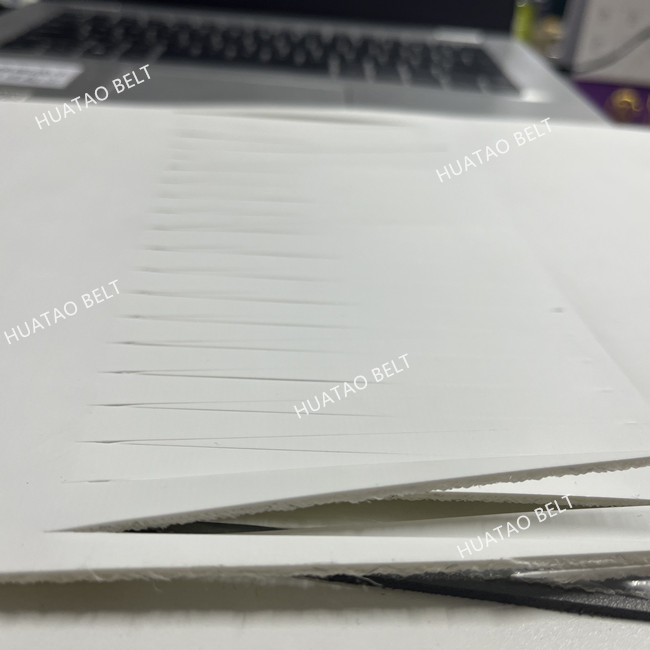
A Z-splice joins the belt ends through interlocking finger-shaped cuts.
Why consider it?
Provides a relatively flat joint profile
Avoids raised metal clips
Supports smooth running over pulleys
Suitable for belts where surface continuity matters
It is commonly used for forming belts and pre-press belts.
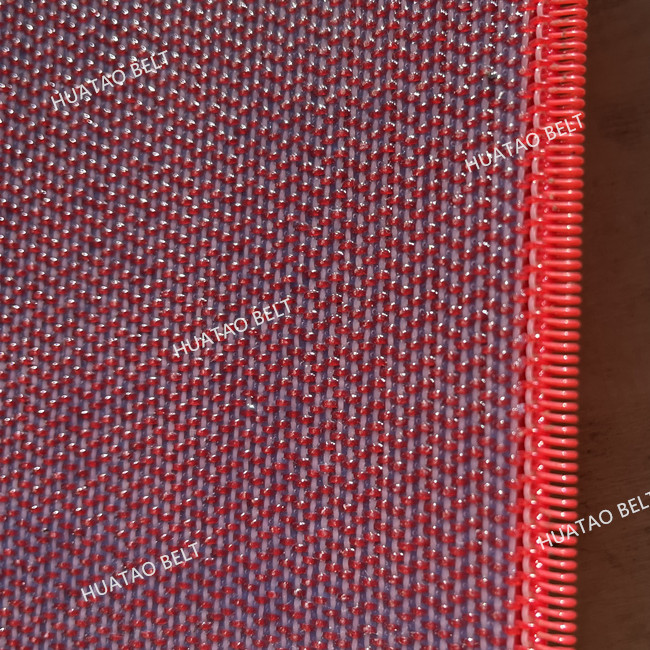
A spiral ring connects the ends of a compatible mesh belt using spiral-shaped elements.
Its main benefits include:
Suitable for selected open mesh structures
Can be opened and reconnected when designed for this purpose
Practical for certain permeable belt applications
Can simplify installation in restricted machine spaces
It can be considered for deaeration belts, steam mesh belts and intermediate belts.
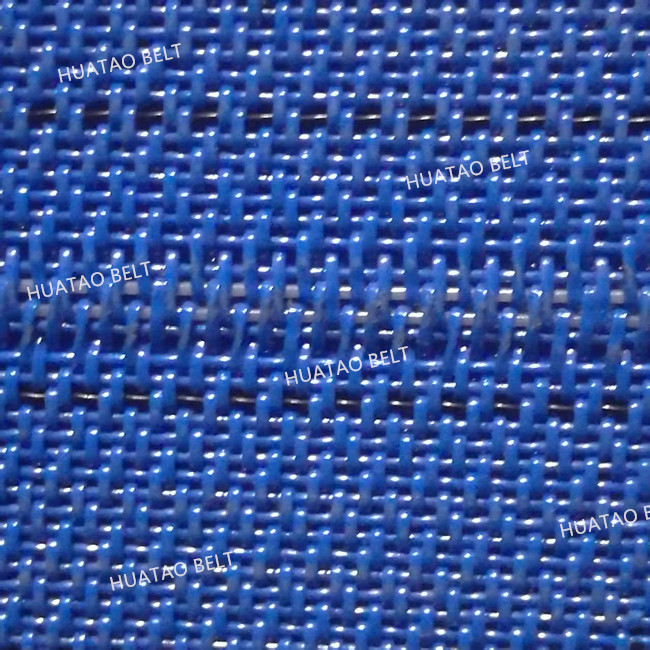
A double pin connection uses two pins through aligned loops.
Its advantages include:
Mechanical connection
Convenient opening and reconnection for suitable designs
Easier inspection of the connecting pins
Useful for certain mesh belt installations
It is an option for deaeration belts and steam mesh belts, depending on the belt structure and operating conditions.
An endless belt is manufactured as a closed loop.
Its advantages:
Continuous running surface
No exposed mechanical fastener
No separate connecting pin or spiral element
The main point to check is installation access. A closed-loop belt may be difficult to install if the machine structure does not allow enough clearance.
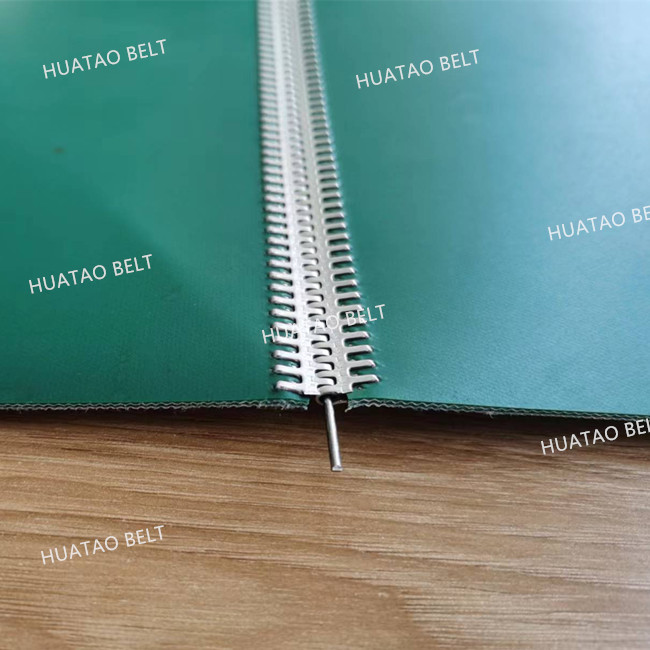
Steel clips mechanically connect the belt ends.
Advantages:
Quick installation
Convenient for on-site repairs
Practical for many material conveying applications
This joint can be considered for bin bottom belts. However, the metal fastener creates a raised connection, so it may not be suitable for every application requiring a smooth contact surface.
| Application | Joint option |
| Forming belt | Z-splice |
| Pre-press belt | Z-splice |
| Deaeration belt | Z-splice / spiral ring / double pin / endless / steel clip, depending on design |
| Intermediate belt | Spiral joint |
| Steam mesh belt | Spiral joint/ double pin |
| Bin bottom belt | Steel clip |
These are common options to consider, not universal rules. Always confirm the joint against the original belt construction and machine design.
Before requesting a quotation, check:
Belt application: Which machine section is it installed in?
Belt dimensions: What are the width, length and thickness?
Existing joint: Is it a Z-splice, spiral ring, double pin, endless or steel clip?
Working conditions: What are the speed, tension and pulley diameters?
Installation: Can the belt be installed as a closed loop, or is on-site joining required?
Related product information:
Do not choose a joint simply because it is cheaper or easier to install. The right connection should match the belt structure, the machine and the process.
Are you sourcing a replacement belt but unsure which joint to specify?
Provide the belt dimensions, machine model and a few photos of the existing joint. These details can help start the selection process.
can not be empty
can not be empty

HUATAO WOOD PROCESSING BELT Co., Ltd
ADD : No.298 Zhonghua North Street, Shijiazhuang 050000 China.
TEL : +86 0311 80690567
EMAIL :bella@huataogroup.com
Web: www.huataobelt.com
 WhatsApp & WeChat : +86 17731169773